
Quick picks:
- Best value: Cuisinart Precision Master 5.5-Qt (SM-50) — a bigger bowl than the Artisan for $282.19
- Best all-rounder: KitchenAid Artisan Series 5, 5-Qt (KSM150PS) — tilt-head ease, the full attachment hub, and a long track record for $349.95
- Best for bread and big batches: KitchenAid 6-Qt Bowl-Lift — fixed-head strength and 6-qt capacity, at $649.95
On price alone this looks simple: Cuisinart at $282.19, KitchenAid Artisan Series 5 at $349.95, and KitchenAid’s 6-Qt Bowl-Lift at $649.95. That is a $67.76 step from Cuisinart to Artisan, and a $300 step from Artisan to Bowl-Lift.
So the real question is not “which brand is better?” It is what those steps actually buy you. Sometimes the answer is a lot. Sometimes, for the baking you actually do, it is almost nothing.
Related reading: KitchenAid Artisan Series 5 vs 6-Qt Bowl-Lift (2026) and Best Stand Mixer for Bread Dough (2026).
What actually differs
- Price and what it buys: Cuisinart wins on value outright. KitchenAid’s premium buys the attachment ecosystem, a longer track record, and — in the Bowl-Lift — a stiffer frame for heavy dough.
- Design: The Cuisinart and the Artisan are tilt-head mixers: the head hinges back to add ingredients and swap tools. The Bowl-Lift head is fixed and the bowl cranks up to the beater — stronger under load, but taller and less convenient day to day.
- Capacity: Cuisinart 5.5-qt, Artisan 5-qt, Bowl-Lift 6-qt. On paper Cuisinart beats the Artisan here, and that matters for cookie and bread batches.
- Attachments: KitchenAid’s clearest advantage. Both KitchenAids use the same front power hub for pasta rollers, meat grinders, grain mills, and more. Cuisinart’s attachment range is much smaller.
- Track record: KitchenAid stand mixers have decades of home use, replaceable parts, and repair knowledge behind them. The Cuisinart Precision Master is capable, but it does not have that history yet.
The picks
Best value: Cuisinart Precision Master 5.5-Qt (SM-50)
$282.19
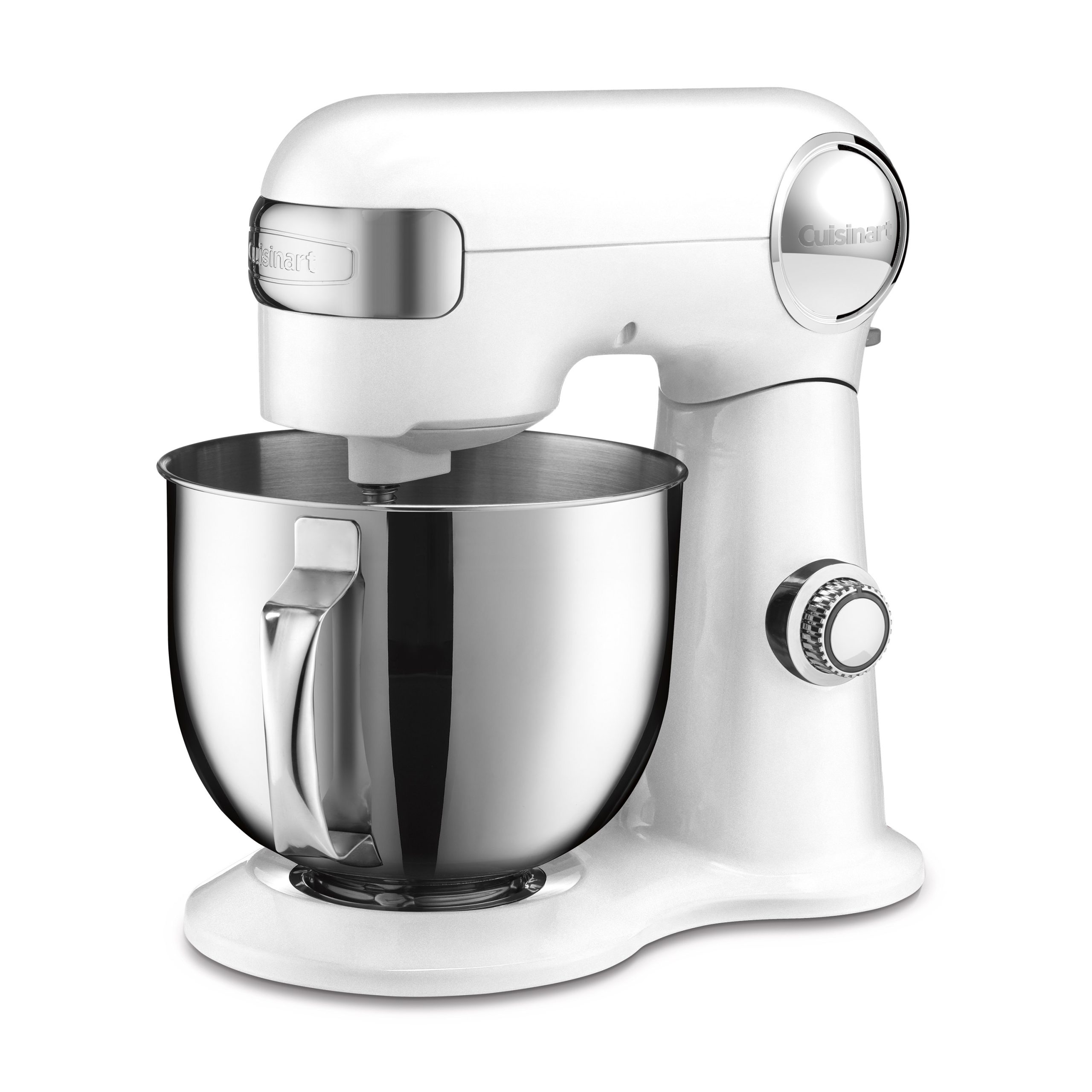
The Cuisinart is the honest budget answer, and it is not a compromise pick. Its 5.5-quart bowl is larger than the Artisan’s 5-quart bowl, it ships with the tools most bakers need — beater, dough hook, whip, and splash guard — and it handles a normal home workload well: cake batters, cookie dough, whipped cream, standard pizza dough, and single-loaf bread dough.
Where you feel the price difference is at the edges. Very stiff, low-hydration dough in a full batch pushes it harder than the Bowl-Lift, so split a stiff batch rather than forcing it. Its attachment ecosystem is a fraction of KitchenAid’s, and nobody can honestly promise a 15-year record for a model that has not existed that long. If none of those edges is your baking life, save the money — for most mixed baking, this is enough mixer.
Pros: Lowest price here at $282.19; 5.5-qt bowl beats the Artisan on capacity; solid on standard batters and doughs; lighter and easier to move.
Cons: Stiff, large dough batches push it hard; small attachment range compared with KitchenAid; long-term durability record is unproven.
Best for: Budget-conscious bakers, first stand mixer buyers, and anyone whose baking is mostly cakes, cookies, and standard doughs.
Best all-rounder: KitchenAid Artisan Series 5, 5-Qt (KSM150PS)
$349.95
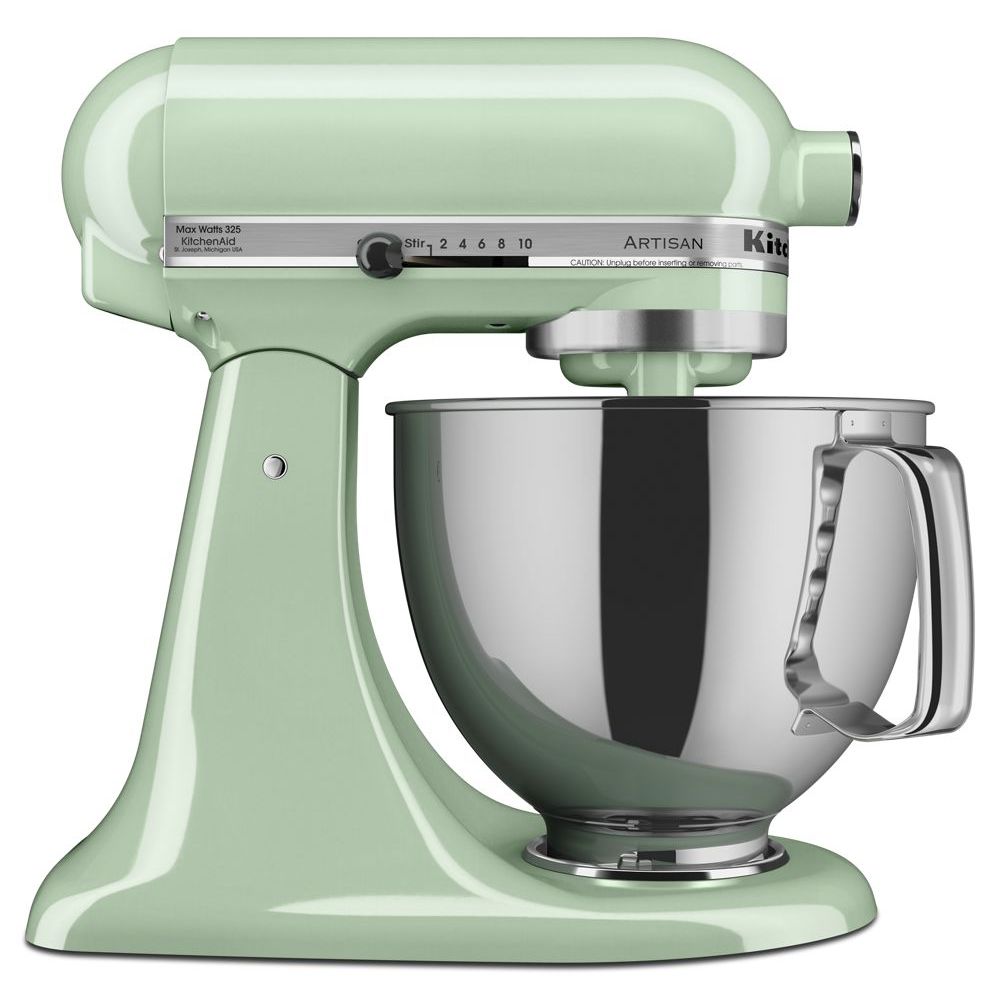
The Artisan Series 5 is the default KitchenAid for a reason. The tilt-head design is the easiest to live with: lift the head, add flour in stages, scrape the bowl, swap the beater for the whip in seconds. Its 5-quart bowl handles a double batch of cookies, a standard layer cake, or one normal bread recipe without drama.
One correction worth repeating, because older listings get it wrong: the Artisan Series 5 is 5-quart, model KSM150PS — not 4.5 quarts. The 4.5-quart figure belongs to KitchenAid’s Classic series.
What the extra $67.76 over the Cuisinart buys is the system around the mixer: the full power-hub attachment range, widely available parts, and a model line with a proven record measured in decades. What it does not buy is bowl-lift strength. Frequent large, stiff dough batches will strain a tilt-head over time, whichever logo is on it. See our detailed comparison in KitchenAid Artisan Series 5 vs 6-Qt Bowl-Lift (2026).
Pros: Easiest daily design here; full KitchenAid attachment hub; proven track record and parts availability; 5-qt bowl covers most home baking.
Cons: $349.95 is $67.76 more than the Cuisinart for a slightly smaller bowl; tilt-head flexes more under heavy dough; still heavy to move at around 23 lbs.
Best for: Most home bakers — varied baking with occasional bread, and anyone who wants attachments now or later.
Best for bread and big batches: KitchenAid 6-Qt Bowl-Lift
$649.95
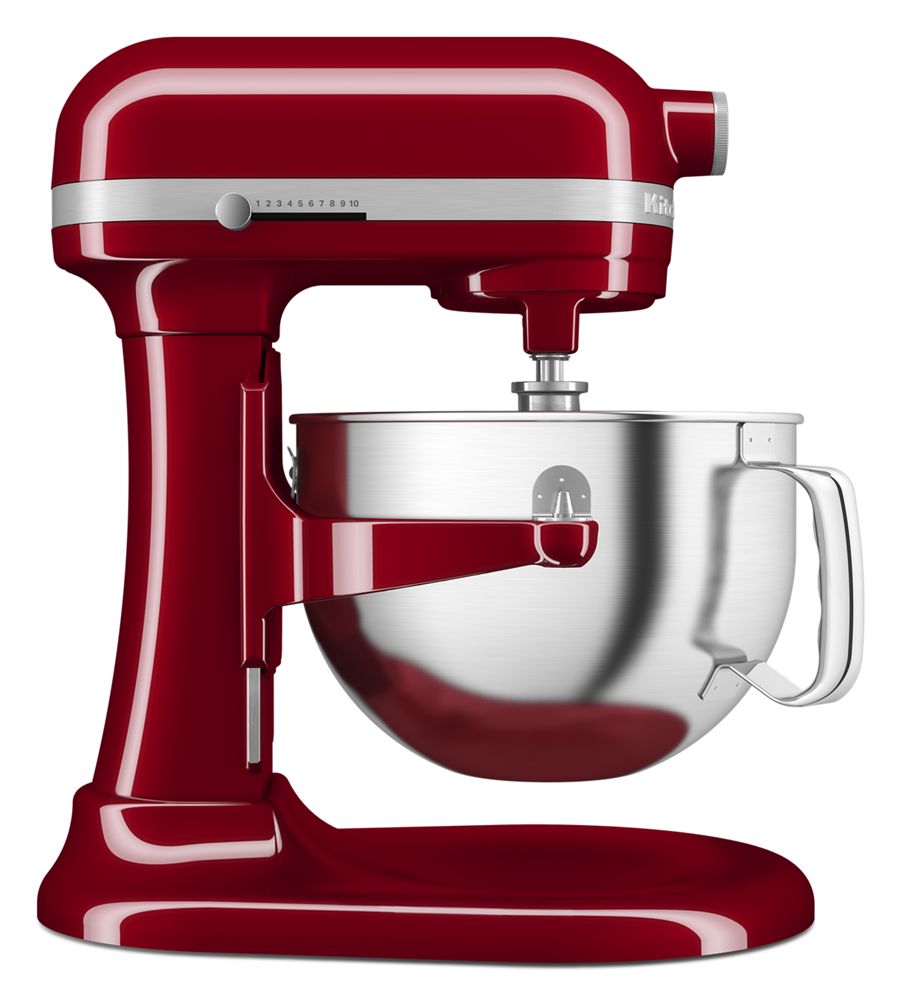
The Bowl-Lift is a different kind of purchase. You are not paying $300 more than the Artisan for a nicer finish. You are paying for a fixed-head frame that stays composed when dough fights back, plus a 6-quart bowl that makes double batches normal instead of a squeeze.
That matters if bread is central to your baking: bagels, dense rye, big pizza-dough batches, holiday baking at volume. It uses the same attachment hub as the Artisan, so nothing is lost there. For bread specifically, see Best Stand Mixer for Bread Dough (2026).
The costs are real, and not just money. It is tall — measure your counter-to-cabinet gap before ordering — and heavy enough that most people give it a permanent spot. Adding ingredients mid-mix is more awkward than with a tilt-head. If you mostly make cakes and cookies, those compromises buy you nothing. Naming note: this is the current 6-qt bowl-lift model, not the discontinued Professional 600, whatever an old listing calls it.
Pros: Strongest and steadiest under heavy, stiff dough; 6-qt bowl for double batches; same full KitchenAid attachment hub; built for frequent, hard use.
Cons: $649.95; tall and heavy; bowl-lift access is less convenient; overkill for batter-and-cookie baking.
Best for: Weekly bread bakers, batch bakers, and anyone whose current tilt-head strains on the doughs they make most.
FAQ
Is KitchenAid worth the extra money over Cuisinart?
It depends what you will use. If you want the attachment hub, parts availability, and the longer track record, the Artisan’s premium is defensible. If you will only ever use the beater, hook, and whip that come in the box, the Cuisinart does that job for less, with a bigger bowl.
Can the Cuisinart handle bread dough?
Yes, in standard batches at normal hydration. Where it struggles is the same place most tilt-head mixers struggle: large, stiff, low-hydration batches done often. Split a stiff batch in two and it copes far better. Knead on low speed, as the manual directs.
Do Cuisinart and KitchenAid attachments fit each other?
No. Attachments are brand- and often model-specific. The two KitchenAids here share the same front power hub, so hub attachments fit both, but bowl-fitting accessories still need to match your exact model. Nothing KitchenAid-branded fits the Cuisinart.
Which mixer lasts longest?
The one matched to its workload. A bowl-lift loafing through cakes will last for years, and so will a tilt-head that is not regularly overloaded. The fastest way to shorten any mixer’s life is to knead batches that are too big and too stiff for it, week after week.
Verdict
Buy the Cuisinart Precision Master if value is the point — it is a genuinely capable mixer with the most bowl per dollar here. Buy the KitchenAid Artisan Series 5 if you want the easiest all-rounder inside the deepest attachment ecosystem. Buy the KitchenAid 6-Qt Bowl-Lift only if bread and big batches are your actual routine — for that routine, it is the right machine, and the cheaper two are the false economy.
Prices shown were confirmed by this site on Nov 2, 2026 — check the current price on Amazon before you buy.