Quick picks:
- Easiest overall: Breville Bambino Check current price on Amazon — heats in seconds, forgives mistakes, tiny footprint
- Best all-in-one: Breville Barista Express Check current price on Amazon — grinder included, zero extra purchases
- Best budget test: De’Longhi Stilosa Check current price on Amazon — find out if the hobby sticks for under $150
- Best if you’ll get serious: Gaggia Classic Evo Pro Check current price on Amazon — steeper start, highest ceiling
Beginners don’t need the “best” espresso machine. They need the most forgiving one — the machine that still makes a good shot while you’re learning what you’re doing. An unforgiving machine in beginner hands produces months of sour shots and a Craigslist listing. A forgiving one produces good coffee on day three and a hobbyist by month six.
What beginners actually need
- Forgiveness over precision. Pressurized baskets and fast, stable heat systems cover up beginner mistakes. Commercial-grade precision punishes them.
- Fast heat-up. If it takes 15 minutes to warm up, you won’t practice. Three seconds means you’ll actually use it daily.
- Simple milk steaming. Automatic or panarello wands first; manual wands after you’ve learned.
- A grinder plan. This is where beginners go wrong — I’ll cover it below, but know now: the machine is half the setup.
The picks
Easiest overall: Breville Bambino Check current price on Amazon
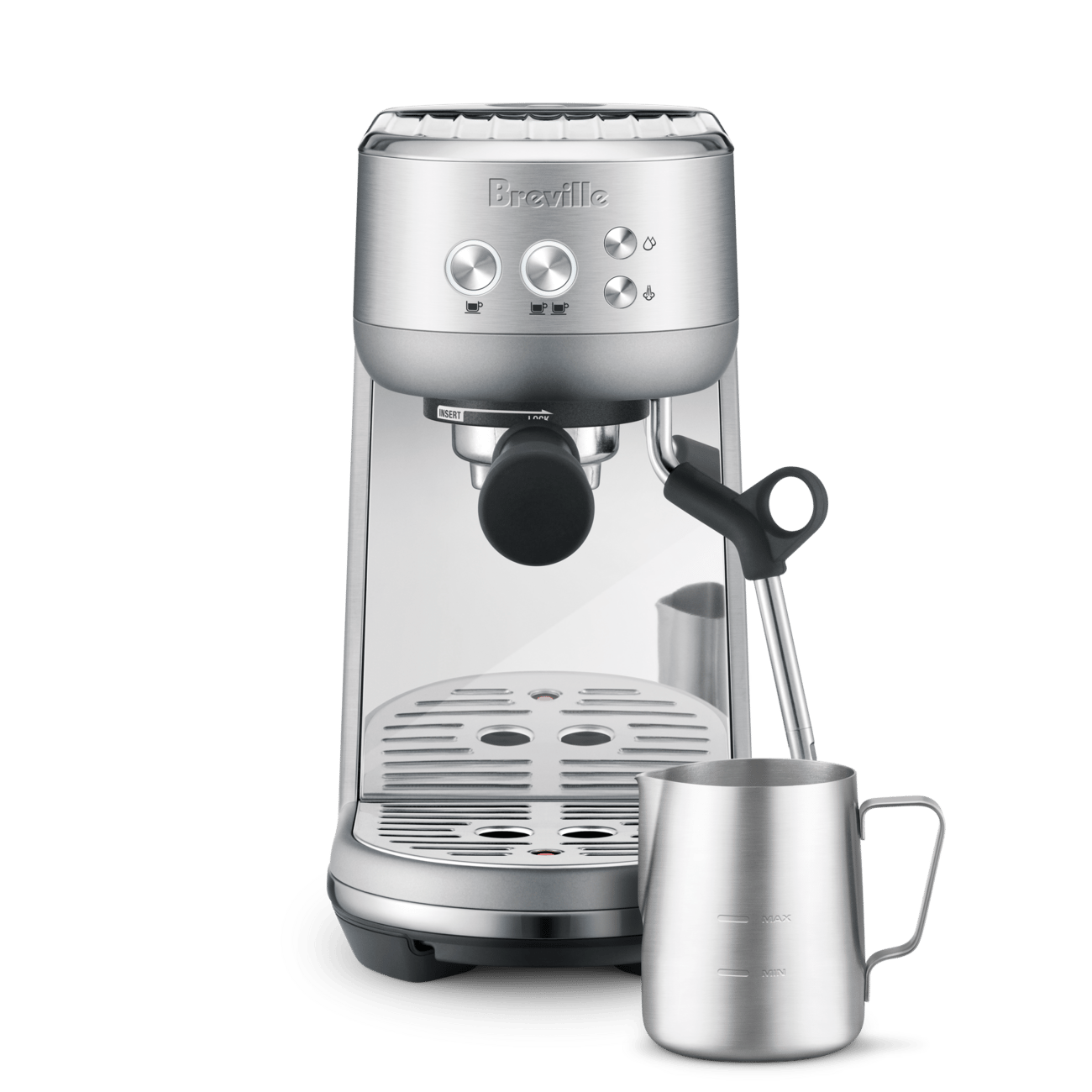
$249.95 (on sale from $299.95)
The Bambino is the best beginner machine because it removes every excuse. Heats up in about 3 seconds, pulls a genuinely good shot with fresh beans, and the automatic microfoam steam wand makes milk drinks easy from day one. It’s also tiny — if counter space is the reason you’re hesitating, this solves it.
Pros: Near-instant heat-up; automatic steaming; very forgiving; compact.
Cons: 54mm portafilter (not the standard); limited upgrade path; not repairable long-term.
Best for: The beginner who wants good coffee immediately with minimum fuss.
Best all-in-one: Breville Barista Express Check current price on Amazon
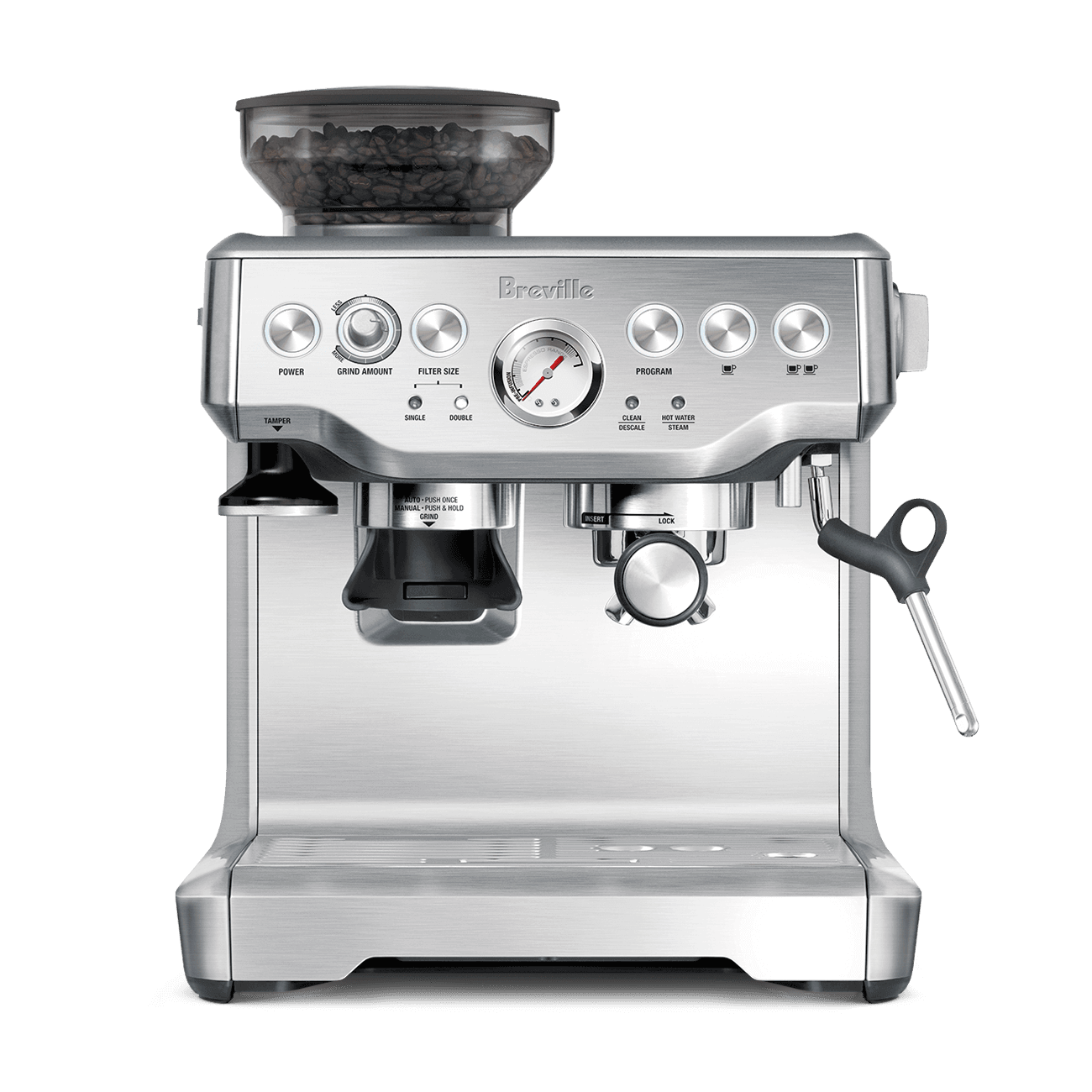
$499.95
The argument for the Barista Express as a beginner machine is simple: it’s the only pick here where you buy one box and you’re done. Built-in conical burr grinder, fast heat-up, forgiving dual-wall baskets included. No separate grinder research, no extra $200 purchase, no “am I missing something” anxiety.
The tradeoff: the built-in grinder is the weakest link and can’t be upgraded separately. In a couple of years you may outgrow it — but by then you’ll know exactly what you want next, which is worth something.
Pros: Grinder included — true one-box setup; forgiving; fast heat-up.
Cons: Grinder can’t be upgraded alone; 54mm portafilter; Breville isn’t built for decades.
Best for: The beginner who wants the complete setup in a single purchase.
Best budget test: De’Longhi Stilosa Check current price on Amazon
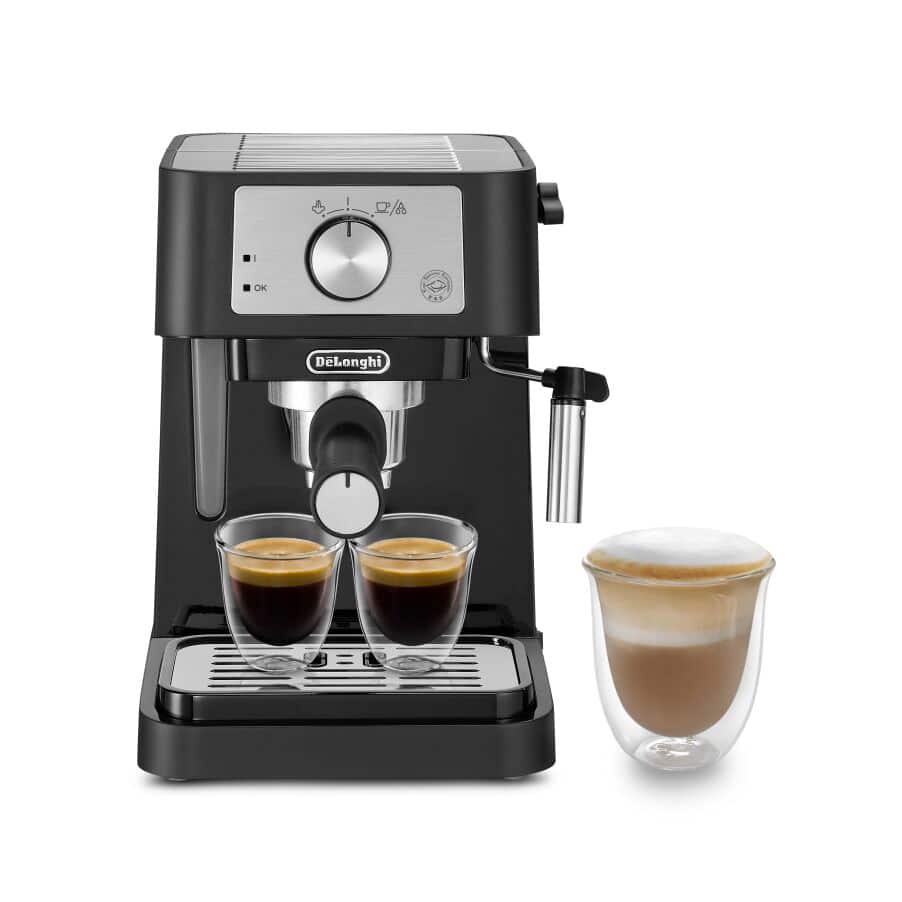
$99.95
Not sure the hobby will stick? Don’t spend $500 finding out. The Stilosa uses a pressurized basket — meaning it won’t teach you real technique — but it makes a perfectly good morning latte for the price of two weeks of café visits. Think of it as a $100 experiment, not a $100 machine.
Pros: Extremely affordable; dead simple; fine for milk drinks.
Cons: Pressurized basket caps quality; you’ll outgrow it fast if you catch the bug.
Best for: Testing the waters before committing real money.
Best if you’ll get serious: Gaggia Classic Evo Pro Check current price on Amazon
$450.83
(The Evo Pro is the current model in Gaggia’s Classic line — it replaced the older Classic Pro with an updated boiler and quieter pump.)
The honest “buy once” pick — with a warning label. The Gaggia is the machine experienced users recommend because it’s the one they still own: 58mm commercial parts, 3-way solenoid, repairable for decades, enormous modding community. But it punishes beginners: 10–15 minute heat-up, temperature surfing to get the brew temp right, and no grinder included (add ~$150–200).
Pros: Highest ceiling of any pick here; commercial-standard parts; lasts decades; endlessly moddable.
Cons: Steepest learning curve; slow heat-up; real all-in cost is ~$600–650 with grinder.
Best for: The beginner who’s sure about the hobby and wants to skip the upgrade cycle.
The beginner grinder guide (don’t skip this)
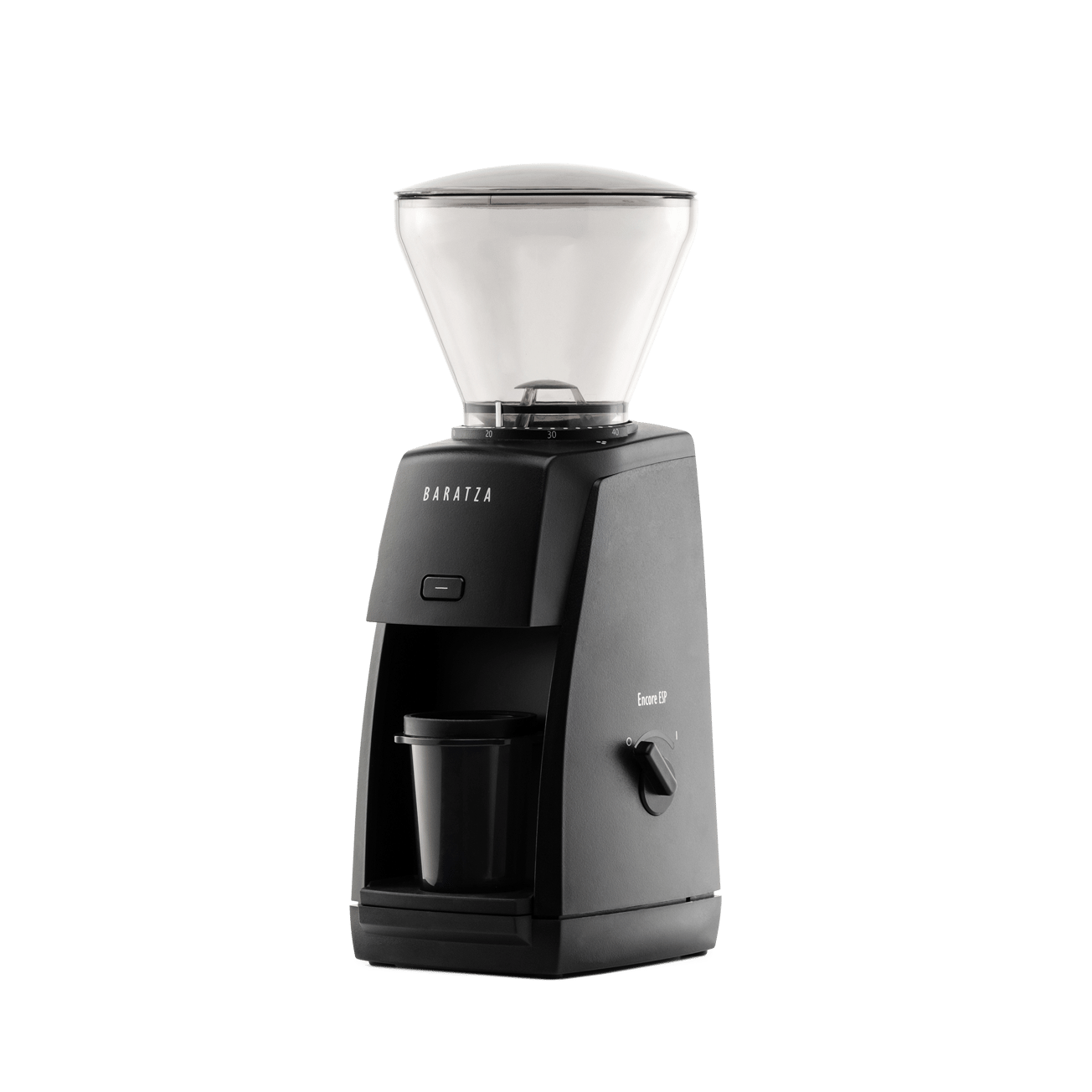
I’ll say it plainly: most beginner espresso failures are grinder failures, not machine failures. Pre-ground coffee goes stale within minutes of opening — it cannot make good espresso, full stop.
Your options, cheapest to best:
- Barista Express — grinder built in, problem solved ($499.95 total).
- Bambino ($249.95) + Baratza Encore ESP ($199.95) Check current price on Amazon — total ~$450, and you get a grinder you can keep when you upgrade the machine later. This is the smart-money combo.
- Stilosa ($99.95) + hand grinder (~$50–80) — acceptable for pressurized-basket brewing while you decide.
If your total budget is $500 including the grinder, option 2 beats every all-in-one on the market.
FAQ
How much should a beginner spend on an espresso machine?
$300–500 including the grinder gets you genuinely good espresso. Below $150 you’re testing interest, not buying quality. Above $700 as a beginner is paying for precision you can’t taste yet.
How hard is it to learn?
Expect 2–3 weeks of mediocre shots while you dial in grind size and dose. That’s normal — it’s a skill, not a button. Forgiving machines (Bambino, Barista Express) shorten this a lot.
Do I really need a grinder? Can’t I use pre-ground?
You need a grinder. Pre-ground coffee stales too fast for espresso — this is the single most common beginner mistake and the cause of most “my machine is broken” complaints.
How long until I’m making café-quality drinks?
Milk drinks: 2–4 weeks with an automatic steam wand. Straight espresso shots you’re proud of: 1–3 months. It’s a hobby with a learning curve, and that’s the fun of it.
Verdict
Get the Breville Bambino if you want the easiest start. Get the Barista Express if you want one box and no extra decisions. Get the Stilosa if you’re experimenting. Get the Gaggia Classic Evo Pro if you’re already sure.
Whichever you choose, budget for the grinder — it’s half the setup. Watching your budget? Our best espresso machines under $500 guide breaks down the price tiers, and our Barista Express vs Gaggia Classic Evo Pro comparison settles the big debate head-to-head.